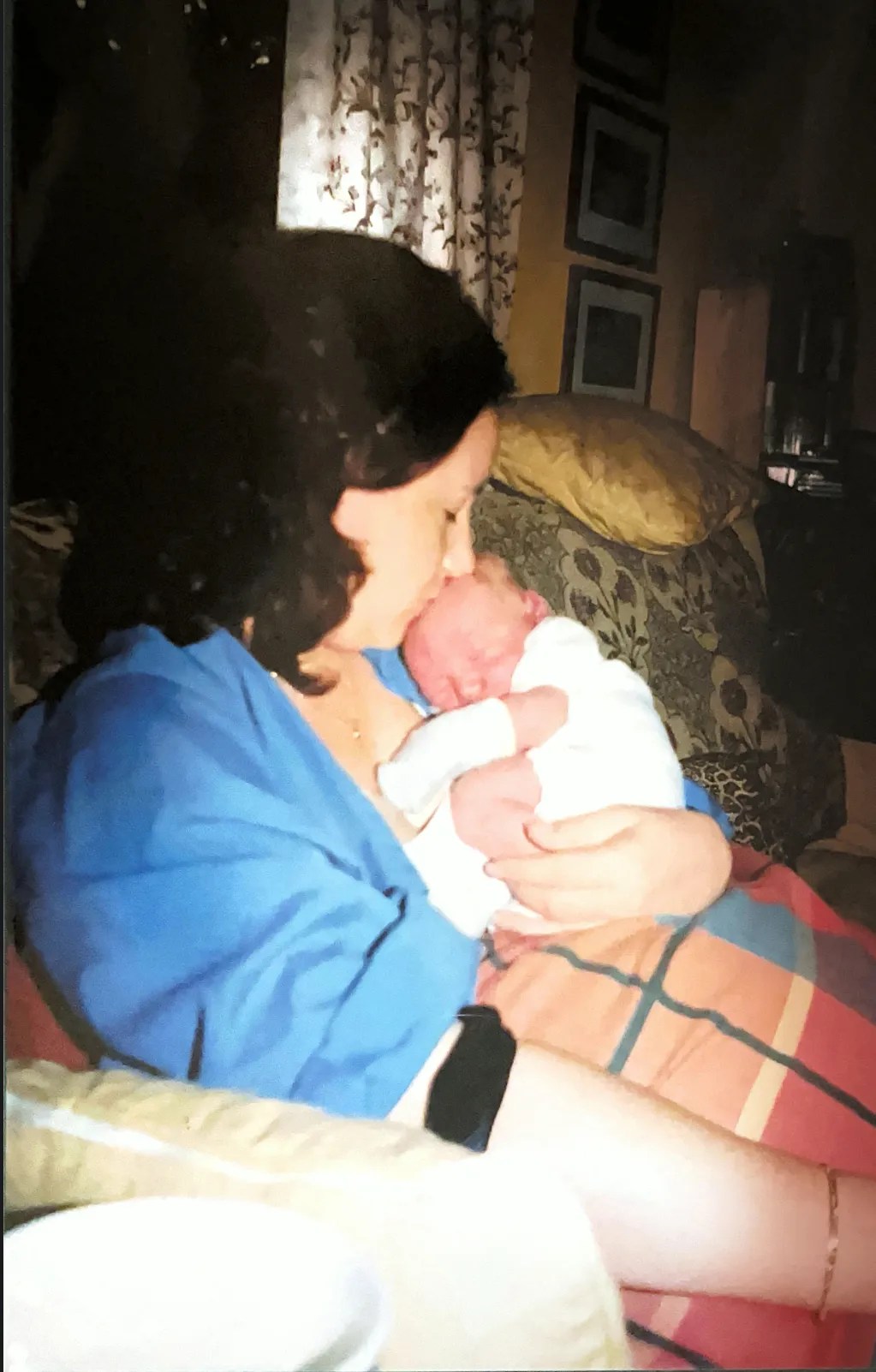
Few people have the misfortune of being able to pinpoint the exact moment their second life began. If I were to pick one monumental period that shaped my life, I would struggle to find an answer. Not because I can’t think of an example, but because I find it hard to describe, or even understand, how this particular experience affected me. But I know it did.
The person I would turn to, to articulate this experience, is one of the few people affected by it more than me. My mum.
A few days after I was born my mum began showing signs of an illness that affects millions of people who give birth around the world. One that is still rarely spoken of. Even within my family, it is a topic of conversation that, understandably, doesn’t come up too often.
Although the experience itself is only occasionally talked about, the effects of it are frequently apparent, in part because this harrowing time for my mother (and the rest of my family), birthed a beautiful new chapter in her life. And of course, a couple of pretty great kids.
In September 2001, my mum was diagnosed with postpartum psychosis.
Postnatal mental illness as a whole is something we have limited understanding of, and this is especially true for postpartum psychosis. Although theories on its potential causes continue to be researched, consensus has proved elusive.
Many suggest it is genetic, but for my mother, the first in her family to have suffered from it, this doesn’t necessarily ring true. There are also ideas about it being hormonal, or linked to sleep deprivation, while others feel psychological factors could contribute.
My mum was always a bit of a perfectionist, a hard worker who did things by the book. This, combined with an internal pressure to live up to the mother she had put on such a pedestal, led to her preparations for my arrival becoming slightly obsessive.
“In the first week of your life I was writing notes with timings, stating – he’s had this feed, he’s slept this long, he’s pooed at this time, and then he’s done this. I would document everything that was happening, like the medical notes I would have written in my physio job.”
“I do think there were some psychological elements to it for me, centred around that archetypal maternal goal I was aspiring to, and a strong sense that I had to ‘do it right’.”
“With my personality type, I do wonder if I had already started to become slightly unwell before you were born. Especially around the antenatal classes we attended. I’m not sure they were that good for me, as I felt I had to follow everything they told me obsessively.”
“I had unwittingly created this unrealistic maternal pedestal of perfection and therefore, on becoming a mother, felt I had to live up to that expectation of myself.”
This is by no means saying that was the only cause. As the episodes of psychosis hit on the same day postnatally after both deliveries, it does seem that there may have been some biological or hormonal trigger to her illness. The uncertainty and lack of understanding around the condition is part of what makes it so terrifying for people giving birth and their families. At least with other issues there is a playbook, an understanding of what causes it and how to treat it.
When these idealised plans around birth and the early months of your baby’s life go so horribly wrong, it can lead to a lot of guilt. Alongside this, profound feelings of loss and inadequacy go even further in adding to the crippling trauma of the illness itself.
The details of the illness are not something I feel we need to delve into too deeply here – we are, after all, focusing on the aftermath. There is one element, however, that I never truly understood until my chats with my mum for this article. It has gone a long way towards helping me understand the reasons for the lasting trauma this illness can cause.
I had always assumed that once you had recovered, or come out of a psychotic episode, there was an understanding that the hallucinations and delusions you had experienced were not real. In mum’s experience, whilst in her rational mind, she knew this was the case – at the time when she was seeing and hearing things, in that moment, they were real to her. This means your body holds on to those memories as if you had actually experienced the events and images that your psychotic mind presented to you.
“The person I’ve found that explains this best is Bessel van der Kolk, a Dutch psychiatrist who specialises in working with trauma. He wrote a fantastic book ‘The Body Keeps the Score’. It describes how we hold all our experiences, not just the traumatic ones, but particularly these, within our bodies, and not just in the cognitive storytelling part of our brain.”
During psychosis, for your mind and body at the time, what you see and hear is real. No matter how much you tell yourself it never really happened, you still have that felt sense of it happening. This can lead to those who have already suffered the unimaginable horrors of the illness suffering still further.
“It was after your sister was born that I met with a community psychologist who effectively said to me, ‘what you’ve lived through, and the symptoms you’re experiencing now, are similar to the symptoms of PTSD.’”
This lasting impact is often compounded by those feelings of guilt. Feelings that are again out of reach of the rational side of our mind.
“It makes me sad that the first months of your lives were such a mess, and that we all missed out on those precious early times together. It makes me really sad and I feel really guilty that I couldn’t give you what you needed.”
“I know that I don’t need to feel guilty. I know that I shouldn’t feel guilty, rationally. There’s also a part of me that is now gradually able to forgive myself for it in a way, because I know I didn’t intend for any of this to happen.”
It is this lingering trauma that makes a much fuller understanding of the true scope of this illness so vital, as this can have wider effects for people giving birth, their children and families. There needs to be consistent and educated support for the months, even years beyond, when those suffering are clinically beyond the acute stages of the illness and have left hospital.
This continued support was something that was not really offered to my mum. Although I am sure care has improved over my lifetime, after the neglect our NHS has received since the austerity years, I somehow doubt that it’s massively easy to access.
“After we came out of hospital I had no real therapeutic support. Once a fortnight I had to drive you and me down to Streatham, and I had to go into a community psychiatric hub. A community psychiatric nurse would say to me, ‘So how are you doing?’ And I’d say, ‘Yeah, fine.’ She’d take my blood to make sure that my levels were okay, and she’d give me my prescription for the next fortnight’s medication, and that was it.”
“So nobody at that point said, ‘You might like to go and find someone to talk to about what’s happened,’ or, you know, nobody gave me any inkling I might need more comprehensive support.”
As you’d probably expect, my mum was changed pretty drastically by this.
“There are very few things that can profoundly change your personality; one of those is a really traumatic life event, another is going into long term therapy. And I did both.”
“There’s a concept in the psychotherapy world that, instead of post-traumatic stress, talks about post-traumatic growth. Just because you go through utter shit in your life, doesn’t mean it has to be forever damaging. But the right support is necessary for this to happen and I was privileged to eventually be able to access that.”
It was the shift to a career in psychotherapy that truly began her journey towards healing, one that she, and to a lesser extent the rest of my family, will likely be on for the rest of our lives.
“You can never be truly ‘over it’ I guess, there is a process of recovery, but it will always be woven into the fabric of who you are.”
That process of recovery began with a decision to attend a yoga class and has continued through years of training and practising as a psychotherapist, yoga and mindfulness teacher, (and now yoga therapist).
“I never quite remember whether it was after you or after Floss, but I definitely attended my first yoga class after having one of you. It was the beginning of me starting that process of turning inwards and getting to know myself better.”
“That is why I now work with yoga and somatic movement-based practices, both personally and in my work, because I know what a powerful impact it can have for people as they work through traumatic experiences.”
The therapy training, especially the five years of personal therapy you receive as part of the course, helped my mum develop the understanding that is necessary, not just to heal, but to begin the life long journey of coming to terms with what she had been through.
“There’s a concept of the wounded healer, in Jungian psychology. It acknowledges that many of us who choose to go into healing or caring professions, especially psychotherapy, will be working with our own wounds as well as those of others.
“It’s been part of my healing. The five year process of that training did transform me as a person. I feel content and settled now in what I do and how I do it.
“Rather than it being this amazing, ‘Look at what I’ve done,’ it’s more that it has helped me to find a happier, healthier relationship with myself and to be able to see the hope in things.
“When I look back now, I’m not sure I really liked myself much before I had you two. I thought I was pretty useless and not that good for anything really, my self-worth and self-belief were pretty non-existent.
“I am now a completely different individual from the one that had babies and had psychosis. I do actually really quite like myself now.”
I have never been able to comprehend the horrors that my mother experienced with this illness. No amount of talking can bring that hell to life for someone who has yet to witness it. Thankfully my mum eventually received the help and understanding needed, not to move past it, but to learn to live alongside it and integrate the experience into who she is.
My mother was terribly unlucky to have gone through this, but there were silver linings. As with so much in our country, the privileges of class, wealth, and education allowed her recovery from the illness to be far smoother than it is for many others. She had the care and support of family and friends and has been privileged enough to have the time and the understanding to come to terms with it. Through that understanding, came opportunities to make changes and draw some positives from these dark days.
The illness changed her totally, but thanks to the chances she found to learn and grow, I have no doubt that she would agree these changes have been positive ones. The anxiety, the perfectionism and the guilt that followed her in her early years, still rumble around at times, but they have certainly lessened.
Not everyone is so lucky. A large part of this is due to a systemic lack of understanding on how to deal with people suffering through this, severe underfunding and lack of resources, and the prevalent stigma associated with going ‘mad’.
Awareness and understanding are keys to all growth. The more that people are aware of the horrors of this illness, the less stigma there is surrounding it, and with better provision for mental health care services in our country, the more we will be able to offer hope to those searching for the light at the end of the tunnel and their families.
My mother’s experience should not be held up as the only way through. Everyone needs to find their own path within their suffering. However, with greater understanding and compassion we can make tremendous strides towards ensuring that the transition into the second life my mother has enjoyed is as manageable as possible for as many people as possible – whatever it may entail.
Read the article here: https://substack.com/home/post/p-172181555
 Henry Tuppen
Leave a comment